6
Birdwatching
Birdwatching in Pipa
At 7 in the morning, Pipa’s forest speaks much louder than the village.
- Duration About 2 hours on average
- Languages English, Spanish and Portuguese
- Team over 32 years of experience in Pipa Beach
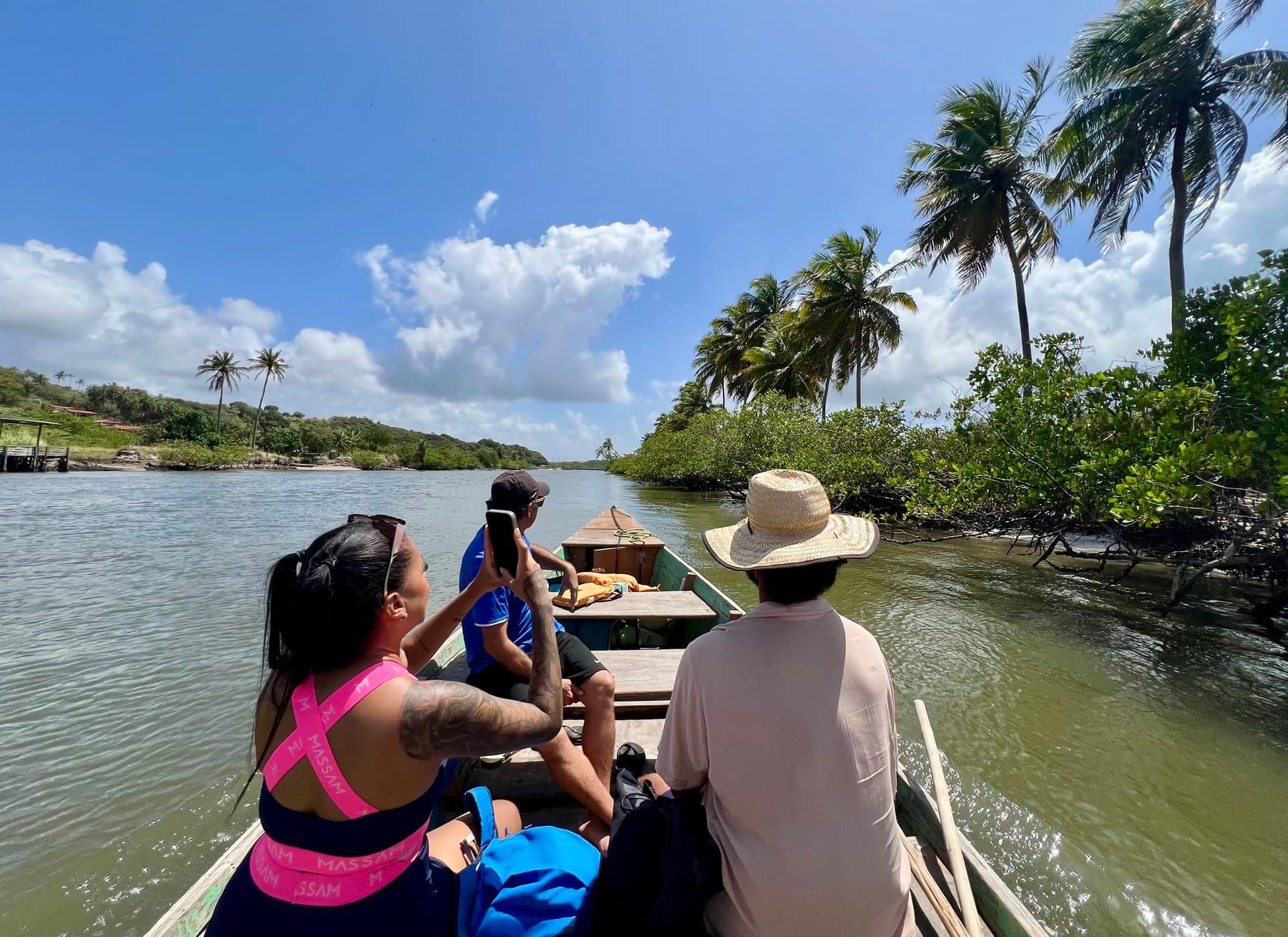
Before the village wakes up, Pipa’s Atlantic Forest and coastal ecosystems are already in full swing. It is the time of day when birds let themselves be seen. Plenty of people spend days in Pipa without knowing this happens so close by.
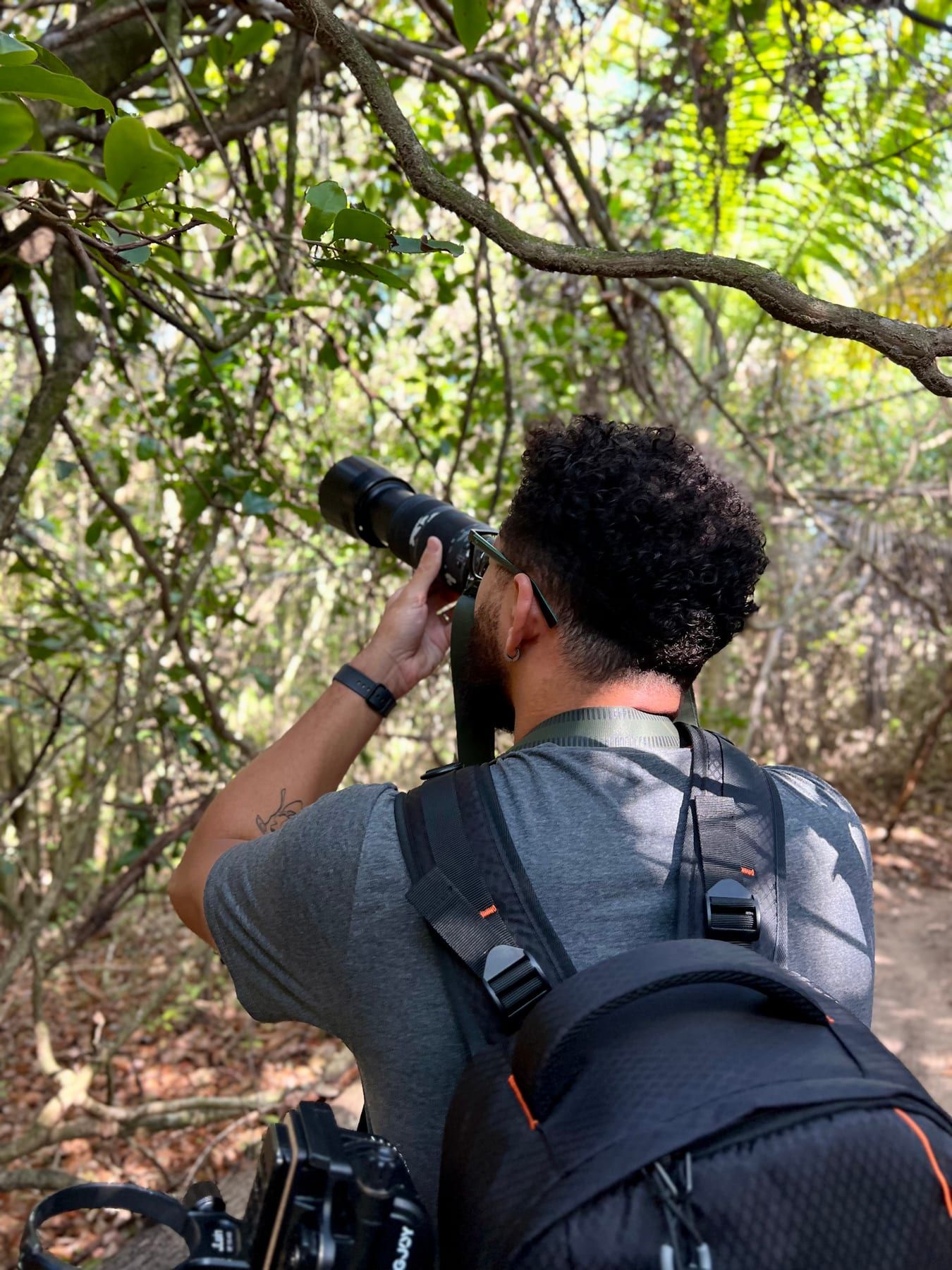
The experience moves at a quiet, low-impact pace, with specialized guidance, focused on spotting, identifying and enjoying native birds. Along the way, the conversation covers the species and their habitats, and endemic or rare birds join in when they are present in the area.
After a while, your attention shifts. What seemed like a forest full of sounds starts to have names. People who love nature photography, or simply a quiet morning, tend to leave with a different way of looking.
Two local biologists lead the experience, and only one of them is also a photographer. That is why the morning comes in two versions. With photos included (R$ 250 per person), the photographer biologist leads and captures the morning, and binoculars are included. Without photos (R$ 180 per person), it is led by the biologist only, with no photos and no binoculars. The birdwatching and species identification are the same in both.
What you experience
- Watching native birds
- Species identification
- Learning about habitats
- Two versions: photos included or biologist only
- Environmental education
What’s included
- Led by a local biologist
- Identification of the species you see
- Environmental education during the experience
- Photos version only (R$ 250): photos of the morning and binoculars
Not included
- Photos of the morning, in the no-photos version (R$ 180)
- Binoculars, in the no-photos version (bring your own if you have them)
Birds you can meet in Pipa’s forest
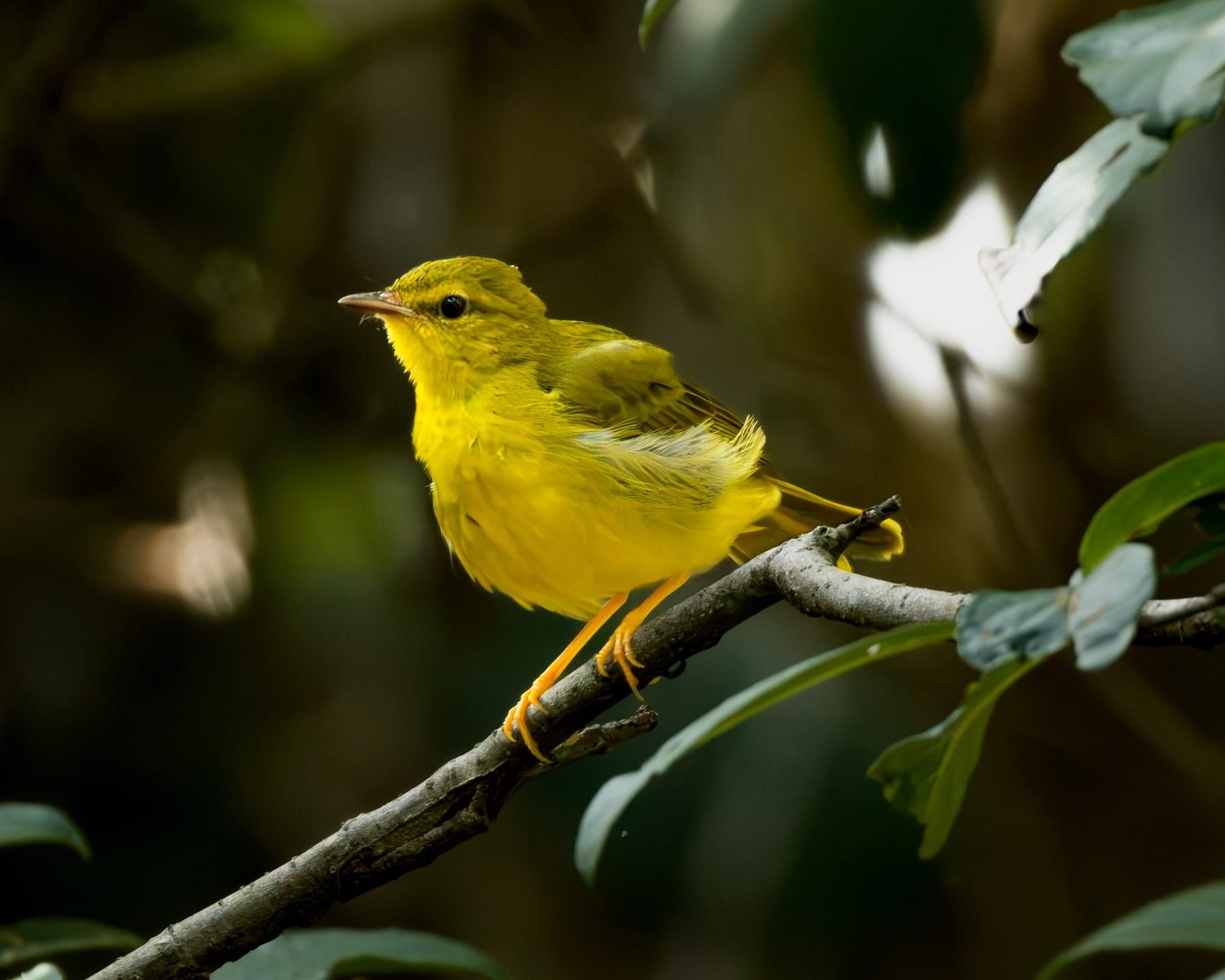
Species recorded in the Atlantic Forest of the Pipa Ecological Sanctuary and its surroundings. Birds are wild: what shows up changes every morning, and none is guaranteed.
The most sought after
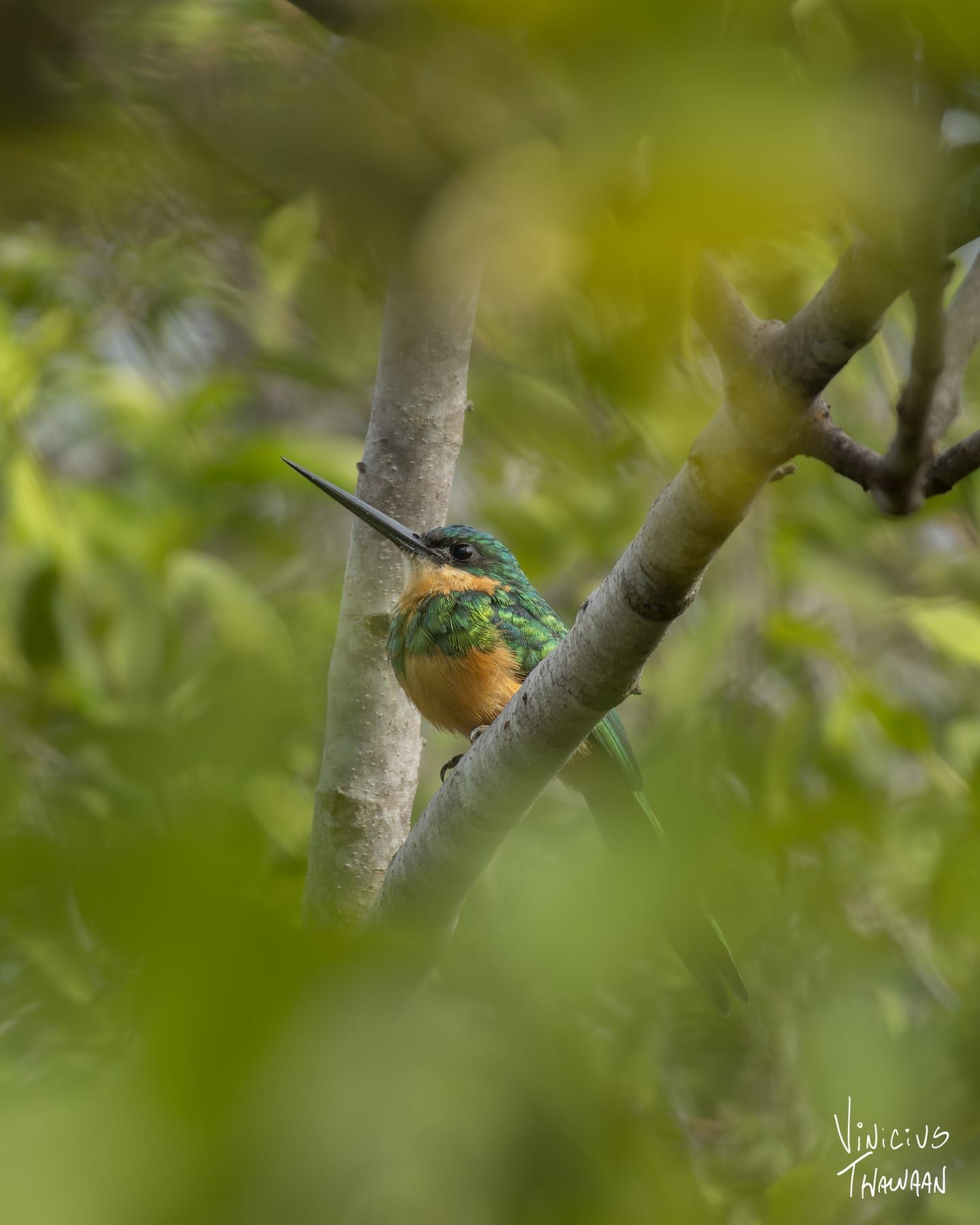
- Rufous-tailed JacamarAriramba-de-cauda-ruiva Galbula ruficaudaMetallic green with a needle-thin bill, hawks insects in flight
- Pectoral AntwrenChorozinho-de-papo-preto Herpsilochmus pectoralisNortheast Brazil endemic, Vulnerable on the IUCN list
- Red-cowled CardinalGalo-de-campina Paroaria dominicanaBright red hood, endemic to the region
- Brazilian TanagerTiê-sangue Ramphocelus bresiliaThe intensely red male stands out at the forest edge
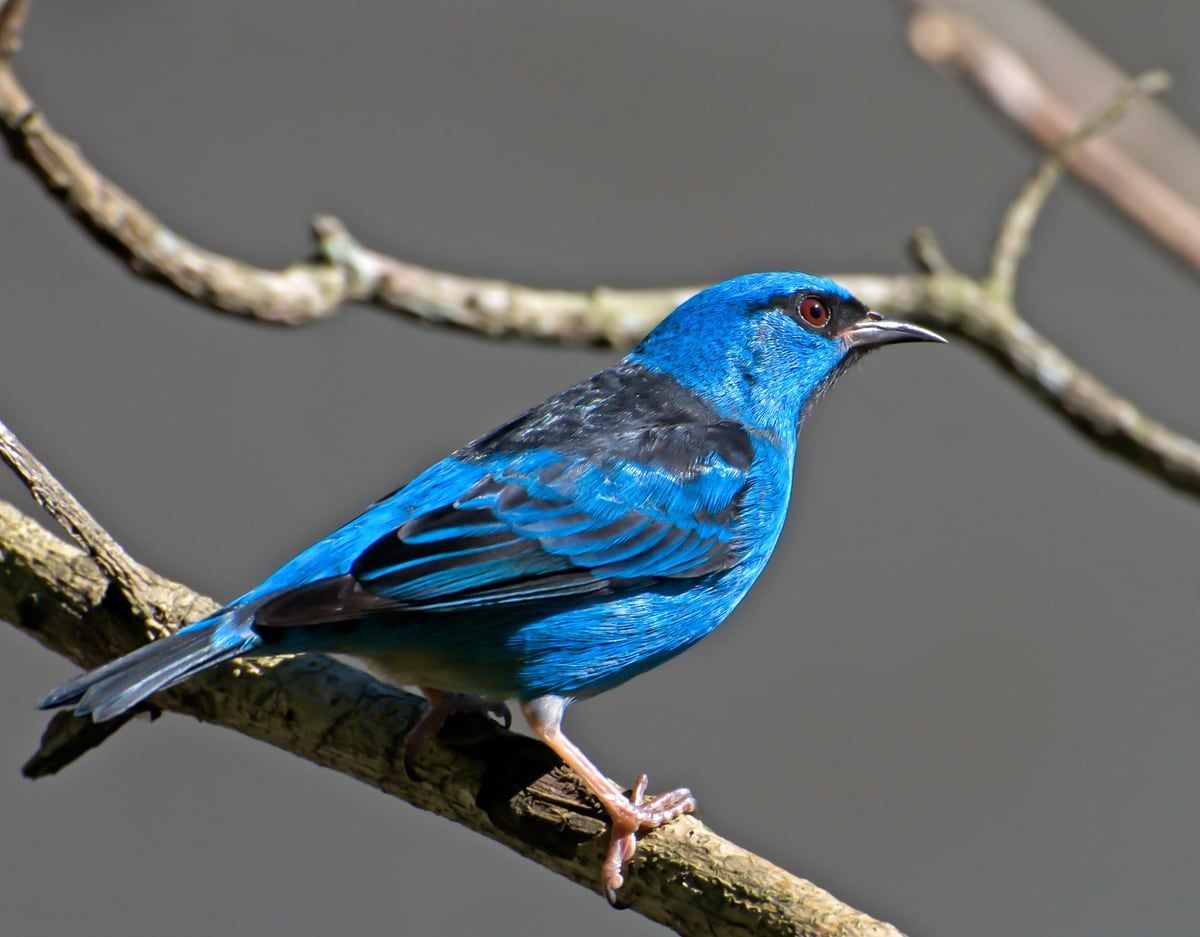 Blue DacnisSaíra-azul Dacnis cayanaThe turquoise-blue male with a black mask, up in the treetops
On the trails and forest edge
- HummingbirdsBeija-flores Eupetomena macrouraThe Swallow-tailed Hummingbird buzzes across the trail
- Palm TanagerSanhaço-do-coqueiro Tangara palmarum
- Rufous-bellied ThrushSabiá-laranjeira Turdus rufiventris
- BananaquitCambacica Coereba flaveola
- Great KiskadeeBem-te-vi Pitangus sulphuratus
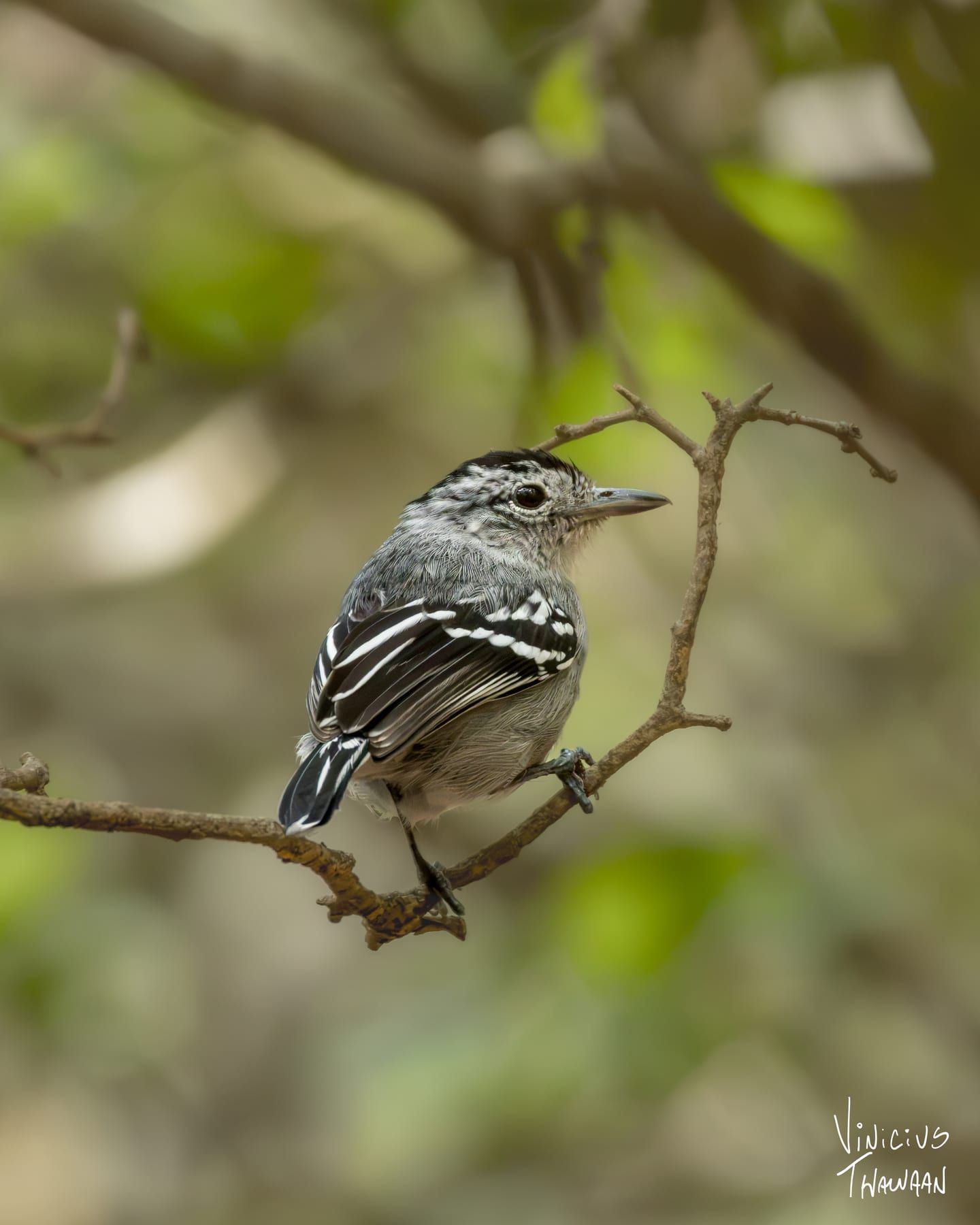
- AntbirdsPapa-formigas ThamnophilidaeStreaked, discreet plumage, highly sought after
Cliffs, sky and surroundings
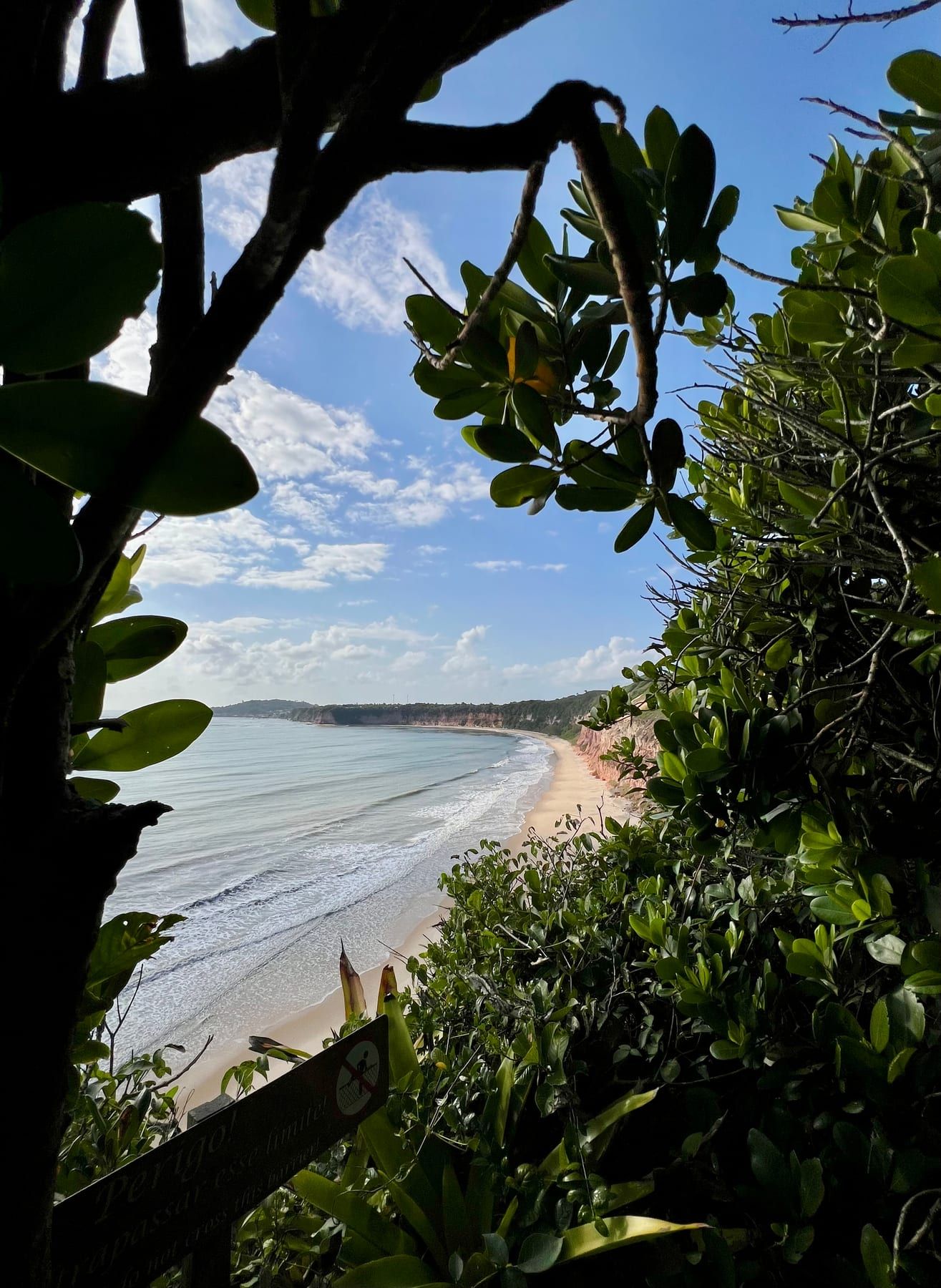
- Magnificent FrigatebirdFragata Fregata magnificens
- Crested CaracaraCarcará Caracara plancus
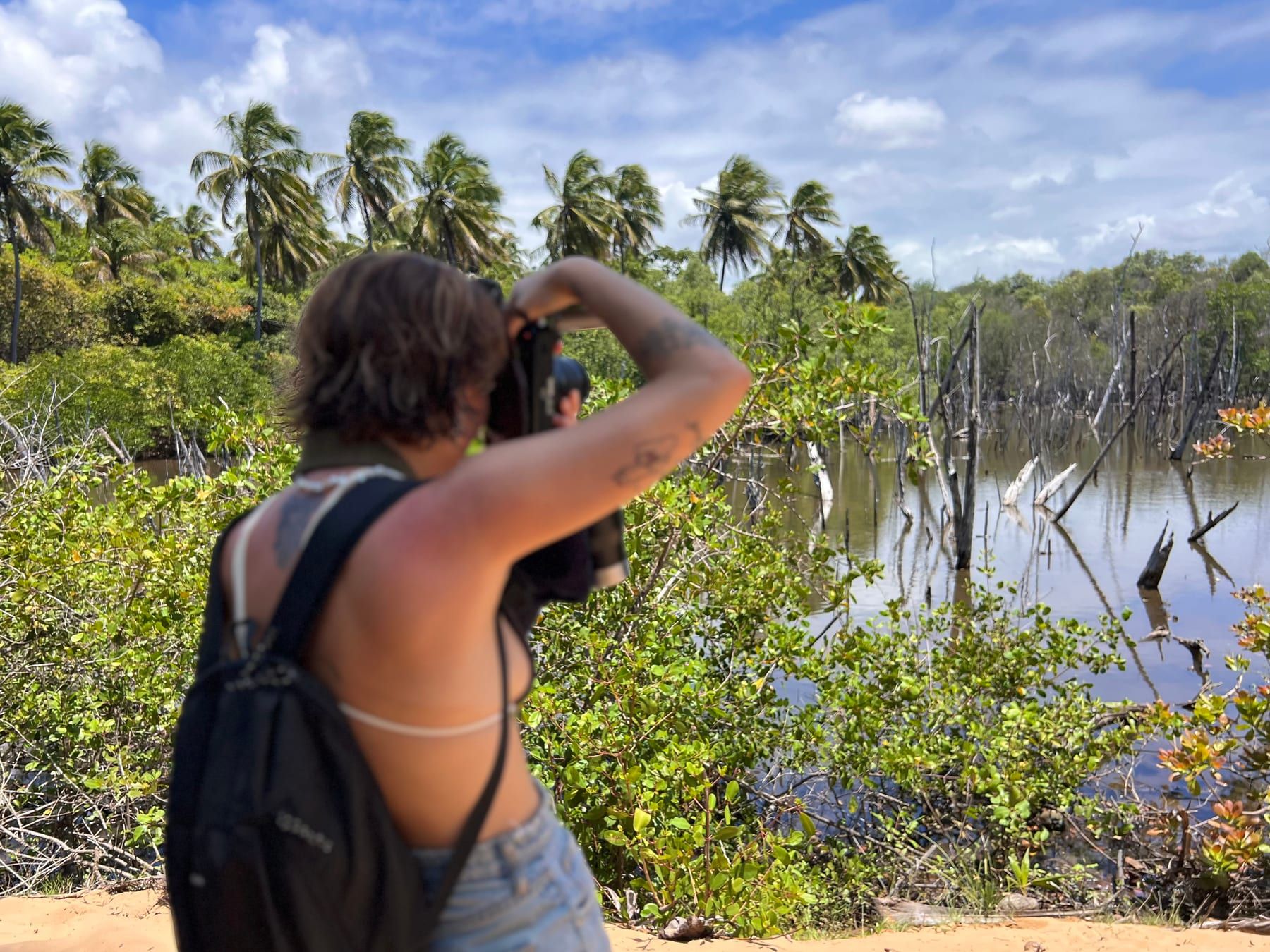
- Waterbirds and migrantsAves aquáticas e migratórias AvesIn the surrounding mangroves and lagoons, such as herons and sandpipers
What birders usually look for
- Northeast endemics: Pipa sits at the northern tip of the Pernambuco Center of Endemism, an Atlantic Forest belt rich in endemic and threatened birds.
- Threatened species: the Pectoral Antwren is listed as Vulnerable by the IUCN.
- Best time of day: early morning, when birds are most active and the forest is cool.
- Best season: September to February, the dry season, the trails are firm. September to March, migratory birds pass through the surrounding mangroves and lagoons.
- Morning list: every species seen gets its common and scientific name, for those who keep a life list.
- Gear: binoculars (included in the photos version) and, for photography, a telephoto lens. Neutral clothing and slow steps help you see more.
Good to know
- Starts at 7 am, when birds are most active
- A silent, low-impact activity
- Birds are wild, and the species you see change every morning
- You choose the version (with or without photos) when booking
Who it suits
Birders, nature photographers and travelers who enjoy early mornings, silence and learning the names of what they see.
Guests on Google
5.0 · 10 reviews
“A sensational, one-of-a-kind experience. I felt completely safe as a woman traveling alone. Wonderful knowledge. Loved it! I will always come back.”
Rafaela Amaral Review on Google · Review translated. “A fantastic experience. A little-explored paradise, well worth living this experience in the middle of nature. Ras Barack is an excellent professional.”
Renann Galvão Review on Google · Review translated. “A wonderful tour! Lots of landscapes and a wonderful dip in the lagoon!”
Mariana Serrano Review on Google · Review translated. “The best team we could have in Pipa! Conscious, deep and grounded tourism, in the experience of being in this abundant nature.”
Milena Borges Review on Google · Review translated.
Your booking
- Cancellation up to 24h
- Secure site
- Registered with Cadastur
- Confirmed by a person